
Tax Invoice vs Commercial Invoice — Key Differences Explained
Published: November 6, 2025
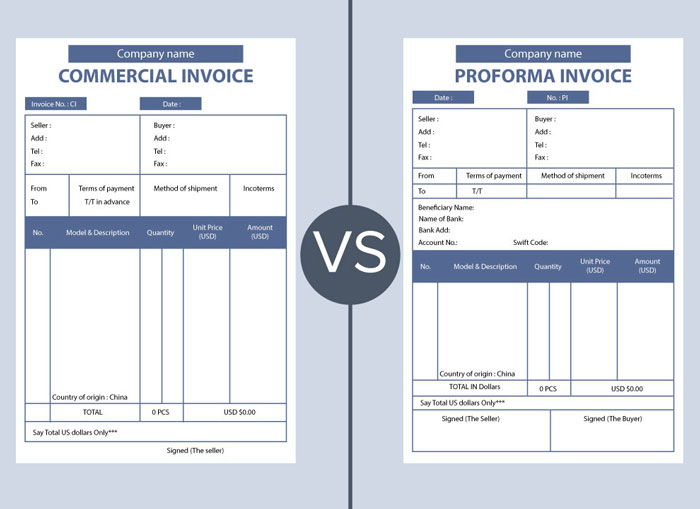
Summary: A tax invoice is used for domestic taxable sales and shows tax registration details and the tax charged. A commercial invoice is used for international trade and customs clearance and highlights the shipment value, product details, HS codes, and trade terms. This guide explains the purpose of each document, what they must include, and how to create accurate PDF versions online with Invozee.
Invoices are not all the same. The document you send depends on the type of transaction you are making. If you sell within your country and collect tax, you issue a tax invoice. If you export goods across borders, you issue a commercial invoice for customs. Mixing these up can delay payments or slow down shipments, so it pays to understand the differences clearly.
What is a tax invoice
A tax invoice is a legal document for domestic taxable sales. It includes your tax registration number, your client’s details, itemized lines, the tax rate, and the tax amount. Businesses and freelancers registered for GST or VAT must issue tax invoices so that clients can record the sale correctly and, where applicable, claim input tax credits.
What is a commercial invoice
A commercial invoice is a document used for cross border shipments. Customs authorities review it to assess the shipment, duty, and taxes. It focuses on product descriptions, quantities, HS codes, declared value, country of origin, Incoterms, and shipping details. It is not a domestic tax document and usually does not include domestic GST or VAT breakdowns.
Side by side comparison
| Aspect | Tax Invoice | Commercial Invoice |
|---|---|---|
| Primary use | Domestic taxable sales | International shipments and customs clearance |
| Core audience | Buyer and domestic tax authorities | Buyer, customs, freight forwarders |
| Tax elements | Shows GST or VAT rate and amount, plus tax IDs | May show duties and taxes for customs but not domestic GST or VAT credits |
| Key fields | Seller and buyer details, tax IDs, invoice number, date, items, tax rate, total with tax | Seller and buyer details, HS codes, unit value, currency, Incoterms, country of origin, weight, packages |
| Document purpose | Payment request and domestic tax compliance | Customs valuation and export documentation |
| Common format | PDF invoice used for accounting and audits | PDF document used for logistics and customs processing |
When to issue each document
Issue a tax invoice when
- You sell goods or services in your country or tax region
- You are registered to collect GST or VAT
- Your buyer needs a document that enables input tax credit
Issue a commercial invoice when
- You export goods to another country
- Your shipment needs customs clearance
- Your logistics partner requests it for transport and insurance
What a tax invoice must include
- Seller business name, address, and tax registration number
- Buyer name and billing address and tax registration where required
- Unique invoice number and date of issue
- Itemized lines with quantities and rates
- Taxable amount and tax rate with the tax amount clearly shown
- Total amount payable and due date
- Signature or digital authentication when required
For examples of clear structure and wording, see How to Create an Invoice for Freelancers and our comparison article Invoice vs Receipt. If you want starter formats, browse Top 5 Free Invoice Templates for 2025.
What a commercial invoice must include
- Full seller and buyer details
- Accurate product descriptions and HS codes
- Unit price, currency, total value, and any discounts
- Country of origin and destination
- Incoterms and payment terms
- Number of packages, weight, and dimensions if required
- Signatures or stamps requested by carriers or authorities
Common mistakes that cause delays
- Using a tax invoice in place of a commercial invoice for exports
- Leaving out HS codes or incorrect product descriptions
- Missing or inconsistent invoice numbers across documents
- Not showing tax registration numbers on domestic tax invoices
- Totals that do not match packing lists or order confirmations
Compliance and record keeping
For domestic sales, tax authorities expect your invoices to follow local rules for numbering, data fields, and retention periods. For exports, customs expects accurate descriptions, values, and trade terms. Keep a clean archive with filenames that include the invoice number and date. When you use consistent numbering and a standard layout, audits move faster and internal reconciliations are easier.
How to create accurate invoice PDFs online
- Open Invozee.com.
- Choose the structure that fits your case. For domestic sales, use a tax invoice format with tax fields. For exports, prepare a commercial invoice with HS codes and Incoterms.
- Add your business details, client information, and relevant data fields.
- Confirm that totals and descriptions are correct.
- Preview and download your invoice as a PDF and store it in a numbered folder.
EEAT references and further reading
For practical guidance on invoice structure and wording, explore the HubSpot invoice templates collection. For small business invoicing software overviews and best practices, review Forbes Advisor’s invoicing guides. These resources, combined with your local tax authority pages, help you stay accurate and consistent.
Frequently asked questions
Do service exports need a commercial invoice
Services that do not involve physical goods usually do not require a commercial invoice for customs. Your contract and a zero rated tax invoice may be sufficient. Always confirm the rules for your region and industry.
Can I show GST or VAT on a commercial invoice
Commercial invoices are for customs and trade valuation. Domestic GST or VAT is usually not shown there. If you must show local tax for domestic accounting, issue a separate tax invoice.
What if the buyer requests both documents
Supply a commercial invoice for customs processing and a domestic tax invoice for accounting. Keep the values aligned and reference the same order or shipment number.
How do I avoid returns or customs holds
Use clear product descriptions, correct HS codes, and consistent values across your commercial invoice, packing list, and transport documents.
Is a PDF acceptable for both types of invoices
Yes. A PDF is the most reliable format for both accounting and customs. It preserves layout and is easy to share and archive.
Final thoughts
Tax invoices and commercial invoices look similar at first glance, yet they serve different goals. One keeps you compliant for domestic tax. The other keeps your shipment moving across borders. When you match the document to the job, payments clear faster and logistics run smoothly. If you need a clean PDF invoice that follows a proven structure, Invozee helps you create it quickly and store it with a consistent numbering system.
Create a compliant invoice now with Invozee and send a clear, professional PDF in minutes.