
Invoice in Español: How to Create a Professional Spanish Invoice
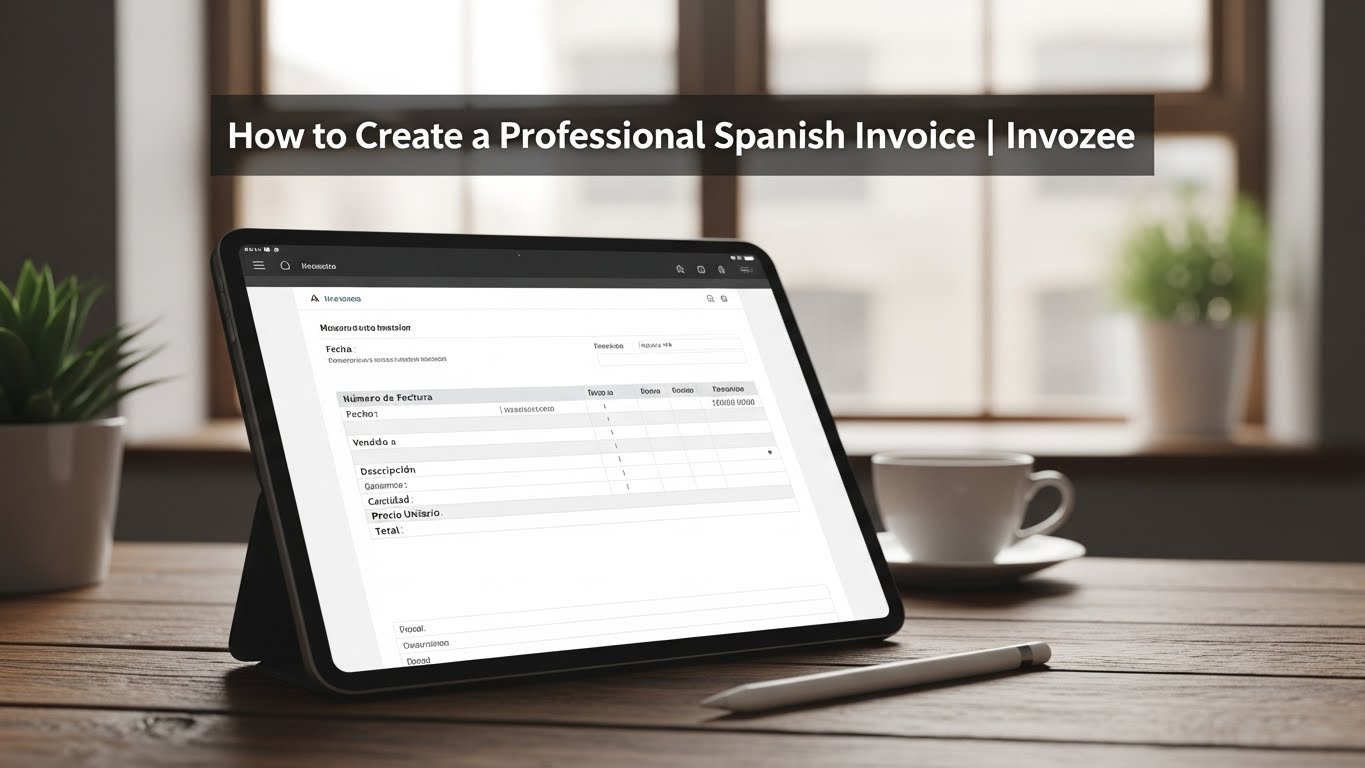
Spanish is one of the most widely used business languages in the world. If you deal with Spanish speaking clients, having a clean, professional factura en español can make you look more organised, more respectful, and easier to work with. The good news is that you do not need a completely different system—just the right structure and vocabulary.
Let’s go step by step, from simple terminology to layout ideas you can reuse inside Invozee.
Key takeaways
- In Spanish, an invoice is called a factura, and it follows the same basic structure as an English invoice.
- Using clear Spanish labels (or bilingual labels) helps clients and their accountants understand your document quickly.
- You can reuse your existing invoice structure and simply translate the key labels and notes.
- Invozee lets you design Spanish or bilingual invoice templates and reuse them for any Spanish speaking client.
- This guide is about clarity and workflow, not tax or legal advice. Always check local requirements if you must follow a specific country’s rules.
- What is an invoice in español (factura)?
- Key Spanish invoice terms you should know
- Basic structure of a factura in español
- Should you use a bilingual invoice layout?
- Practical examples of Spanish and bilingual invoices
- Creating an invoice in español with Invozee
- Frequently asked questions (invoice in español)
What is an invoice in español (factura)?
At its core, an invoice in español is simply an invoice whose language is Spanish. The concept is the same as in English: a document that states who is billing whom, what was sold, when it was sold, and how much is due.
In Spanish, this document is called a factura. Depending on the country, there may be specific layout or numbering rules. For example, some jurisdictions require certain tax identifiers to appear clearly, while others have standard wording around tax or VAT (IVA).
Key Spanish invoice terms you should know
You do not need to be fluent in Spanish to issue a professional invoice in español. Learning a short list of key terms goes a long way.
Common Spanish invoice labels
- Factura – Invoice
- Número de factura – Invoice number
- Fecha – Date
- Fecha de vencimiento – Due date
- Cliente – Client / Customer
- Dirección – Address
- Descripción – Description
- Cantidad – Quantity
- Precio unitario – Unit price
- Importe – Amount / Line total
- Subtotal – Subtotal
- IVA – Value added tax (VAT)
- Total – Total
- Forma de pago – Method of payment
- Términos de pago – Payment terms
- Notas – Notes
Once you know these labels, you can easily map your usual invoice structure to a Spanish version. If you have already created layouts based on guides like our what’s an invoice article or invoice for freelancers, think of this as a translation layer on top of the same logic.
Basic structure of a factura in español
The layout of a Spanish invoice is very similar to that of an English one. Here is a simple structure you can reuse:
1. Header: your business details
- Nombre de la empresa (business name)
- Dirección (address)
- Correo electrónico y teléfono (email and phone)
- NIF / CIF / RFC / CUIT or other tax ID, depending on the country
2. Invoice identity
- Factura clearly labeled at the top.
- Número de factura: a unique invoice number.
- Fecha: the invoice date.
- Fecha de vencimiento: when payment is due.
3. Client details
- Nombre del cliente (client name).
- Dirección (address).
- Correo electrónico de contacto (contact email).
- Tax ID if required (NIF / RFC, etc.).
4. Line items
- Descripción: what you sold or delivered.
- Cantidad: hours, units, or packages.
- Precio unitario: rate per unit or hour.
- Importe: line total.
- IVA: tax, if applicable.
5. Totals and payment info
- Subtotal (before tax).
- IVA (VAT) or other taxes.
- Total a pagar (total to pay).
- Forma de pago (bank transfer, card, etc.).
- Notas sobre los términos de pago, if needed.
If you are coming from a more general template, like those in our free invoice templates for 2025 article, you can keep the same sections and only change the labels to Spanish.
Should you use a bilingual invoice layout?
If you work with teams that speak both English and Spanish, a bilingual invoice can make life easier for everyone involved. The idea is simple: show the Spanish label and its English equivalent side by side.
Pros of bilingual invoices
- Reduces confusion for international clients.
- Helps accountants and auditors who only read one language.
- Makes your invoices feel accessible and professional.
Cons of bilingual invoices
- Requires a little more space on the page.
- Can look busy if every label is doubled.
- Needs consistent wording so you do not mix terms over time.
A simple compromise is to make core labels bilingual (for example, “Factura / Invoice”, “Cliente / Client”) and leave descriptive notes in the main language your client prefers.
Practical examples of Spanish and bilingual invoices
Let’s look at a few quick scenarios to see how this works in real life.
Example 1: Freelance designer billing a client in Mexico
- Factura with Spanish labels.
- Line items such as “Diseño de página de inicio”, “Revisión de logotipo”.
- Totals in Mexican pesos with IVA where applicable.
- Notes section in Spanish explaining the scope reference.
Example 2: Consultant working with a bilingual startup in Spain
- Factura / Invoice as a combined title.
- Paired labels like “Número de factura / Invoice number”.
- Line item descriptions in English if the project language is English.
- Payment terms written in both Spanish and English if needed.
Example 3: Product business selling within the EU
- Spanish invoice for Spanish customers, English invoices elsewhere.
- Standard product descriptions, quantities, and IVA lines.
- Additional note referencing EU VAT rules, if applicable, and pointing to more detailed documentation hosted elsewhere.
General business and invoicing resources from platforms like HubSpot often recommend focusing on clarity first: whichever language you choose, make sure the invoice is easy to read, easy to check, and easy to approve.
Creating an invoice in español with Invozee
Invozee is flexible enough that you can create invoices in English, Spanish, or a mix of both. You are in control of the labels, line items, and notes.
Step 1: Decide on Spanish or bilingual labels
First, choose whether this client prefers fully Spanish invoices or a bilingual layout. Then, define your label set (for example, “Factura”, “Cliente”, “Descripción”, etc.) and apply it to a new template inside Invozee.
Step 2: Translate your usual line items
Take the services or products you already bill for and either translate them to Spanish or create Spanish-friendly versions. If you invoice often as a freelancer or contractor, your existing descriptions from our freelancer invoicing guide are a good starting point.
Step 3: Save the template for Spanish speaking clients
Once you are happy with the layout, save it as a reusable template in Invozee. From then on, issuing an invoice in español is as simple as selecting the right template, choosing the client, and adjusting quantities and dates.
Step 4: Keep your Spanish invoices organised
Invozee helps you track which invoices are paid, outstanding, or overdue, regardless of language. That way you can focus on serving your Spanish speaking clients, not fighting your billing system.
Create clear Spanish and bilingual invoices in minutes
With Invozee, you can turn your usual invoice structure into a Spanish or bilingual template, reuse it for your Spanish speaking clients, and keep all your invoices—English and Spanish—organised in one place.